

Act | Global Offerings
Forests Forward is a signature WWF programme for corporate action in support of nature, climate, and people.
Through the performance-based programme, WWF supports partners to drive their ambition and impact within and beyond their own footprint to support forests globally.
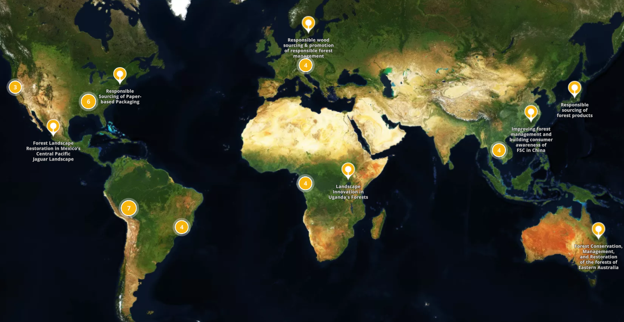
WWF's experts advise companies on up to three focal areas: responsible sourcing, which may include procuring commodities in ways that avoid deforestation, protect biodiversity, and benefits local communities; responsible forest management, which may include the protection of biodiversity, soil health, water systems, and climate functions, and the respect for the rights and livelihoods of local communities and Indigenous Peoples, and may be verified by FSC certification; and funding WWF forest landscape projects that may include restoration and community-led conservation.
In doing so, Forests Forward helps its partners unlock the power of forests to achieve complex goals with meaningful results.
Forests Forward's Impact Report (2025) highlights how four million hectares of forest are benefiting from voluntary corporate action through WWF's Forests Forward programme.
Find out more at forestsforward.panda.org.

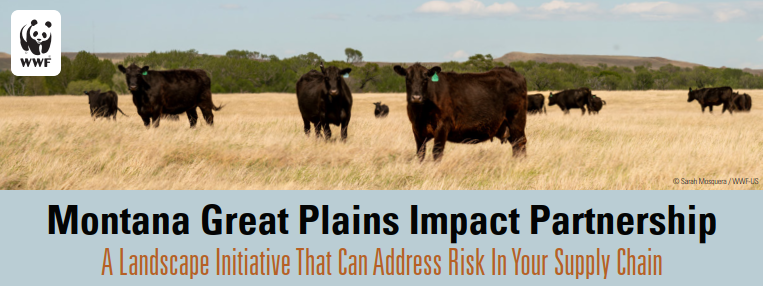
The grasslands that beef and other supply chains depend on are disappearing. The Great Plains lost nearly 2 million acres to crops in 2022 alone. That loss threatens ranching livelihoods and the $20–25 billion in annual services grasslands provide. Ranch-by-ranch efforts can’t match a challenge this large.
The Montana Great Plains Impact Partnership is a landscape initiative covering 63 million acres. It gives companies a coordinated, verified way to invest in the supply they depend on. Through a pooled platform, companies fund avoided conversion, better grazing, restoration and landscape capacity. The money goes to ranchers, Native Nations and local partners through a transparent, partner-driven process.
Companies that join work alongside 17 partners, including WWF-US, The Nature Conservancy and USDA NRCS. They gain more resilient supply, peer learning and credible claims. Those claims rest on an independently reviewed framework aligned to SBTN and CDP. Verra verifies climate claims, and LandScale/Rainforest Alliance verifies all others.
Coming up: a Corporate Stakeholder Consultation Group and final core metrics by December 2026, a way to invest in projects by winter 2026–27, and a claims process launching in spring 2027.
To learn more about participating, contact Suzy Friedman, Senior Director of Great Plains Policy: [email protected], 202-492-1023.
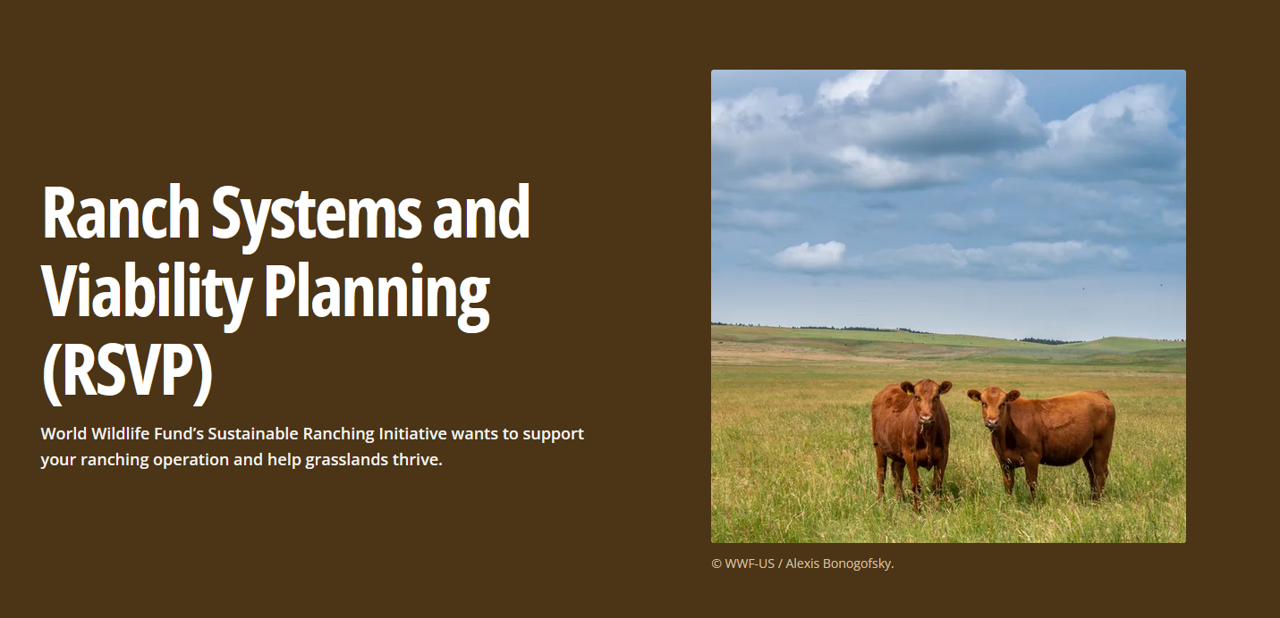
Ranch Systems and Viability Planning (RSVP) Network
Keeping Great Plains grasslands inact by keeping ranches viable
The Great Plains is one of the world’s last large expanses of intact temperate grassland, and one of the least protected. Conversion to row crops continues at more than 1 million acres a year across the Great Plains, and woody encroachment degrades much of what remains. Most of these grasslands are privately managed, and most are grazed. The future of the biome depends on whether ranching stays economically viable. A viable ranch is far less likely to be plowed, subdivided, or sold out of grass.
RSVP launched in 2021. It is WWF’s producer-led network of 153 ranches across Montana, South Dakota, Nebraska, and Wyoming that have committed over 1.7 million acres to keeping grassland in grass and improving grazing management.
RSVP is always locally led. WWF partners with rancher-driver conservation groups that set their own operational goals; WWF and other local partners help them get there.
Rancher commitments include:
- Keep enrolled grassland intact—no conversion—for at least 10 years
- Develop and follow a grazing management plan
- Allow periodic ecological monitoring on enrolled acres
What WWF and partners provide
- Technical assistance and grazing planning from on-the-ground specialists
- Ranch Infrastructure Fund (RIF): co-investment in livestock water, cross-fencing, wildlife-friendly and virtual fencing, and riparian/mesic restoration that enables better grazing management. Projects are reviewed for conservation benefit and verified on-site before reimbursement. 30–40 projects per year, investing $1.5–2.0M annually.
- Ecological monitoring of soils, vegetation, and birds on enrolled ranches
- Education and peer learning: scholarships, workshops, and the annual RSVP Gathering
- Local delivery through rancher-led organizations and trusted regional partners
Learn more about the RSVP program and how to apply
Podcast: Listen to a ranching family’s RSVP success story
