



OPTIMIZE
To use PIE you must define what it is that you are interested in having an impact on. This means that you will need to select places (countries, provinces, states, jurisdictions) that are relevant or interesting for your investment or work. You will also need to define the types of impact on people or nature that you hope your work will have; who or what do you hope to benefit? The variability around defining both place and beneficiaries is what makes each PIE assessment unique. PIE includes a set of beneficiaries from which you can choose spanning conservation, governance, and social objectives. This increases the likelihood that the areas PIE will highlight as optimal will go beyond the biophysical data that underpin the analysis and include social objectives as well.
As you define your PIE cases, you will work through the optimizations manager and create collections and cases. The collections are essentially the grouping of cases that all have the same geographical focus. Within these collections you can modify your inputs in different cases and visualize how the outcomes and optimizations change based on prioritizing different beneficiaries or actions.
Before starting PIE have a good idea of the places you are interested in, who or what you'd like your actions to benefit, and an estimated area over which you'd expect your project actions to take place.

THE STEPS TO FOLLOW
1
To enter the DEFINE area of the tool you should first login. If you still don’t have one, here you can create an account, it takes only 1min, and it’s free!
Once logged in, you can access the OPTIMIZATIONS MANAGER. Here you can create collections to organize and catalogue your requests, and build different cases for optimizations based on location and target criteria of your choice.
After you define the location and target of your case, you can request a PIE Optimization for them.
Analyse the optimization results for your cases in the INTERPRET area of the tool.
CASE INPUTS
Understand the data inputs needed to build an optimization case
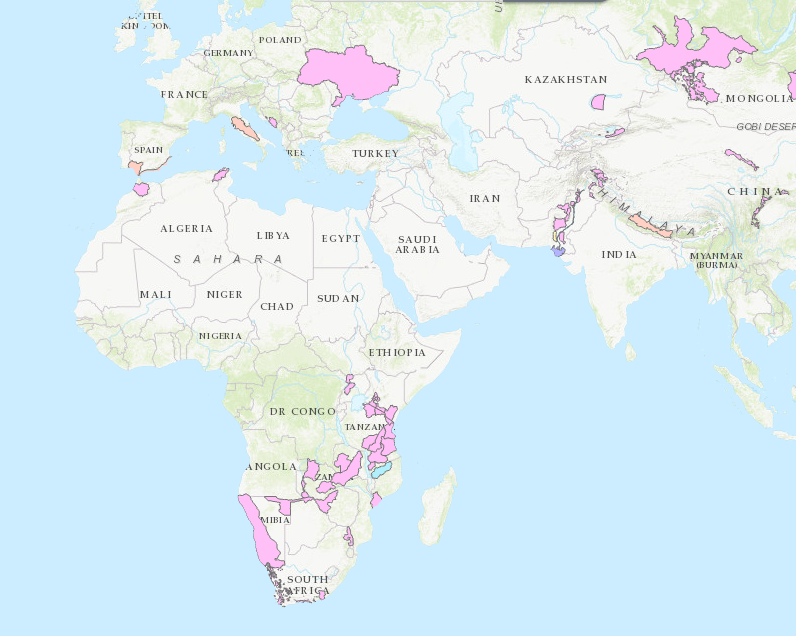
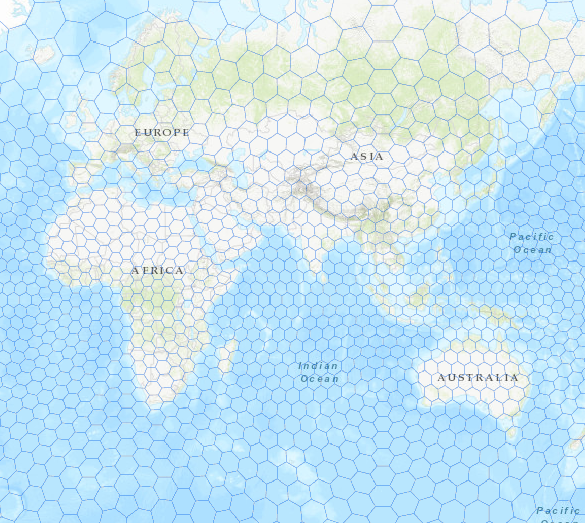
Scale
The scales are the base area on which optimization is calculated in PIE. They represent continuous and adjacent geographic boundaries within which actions take place.
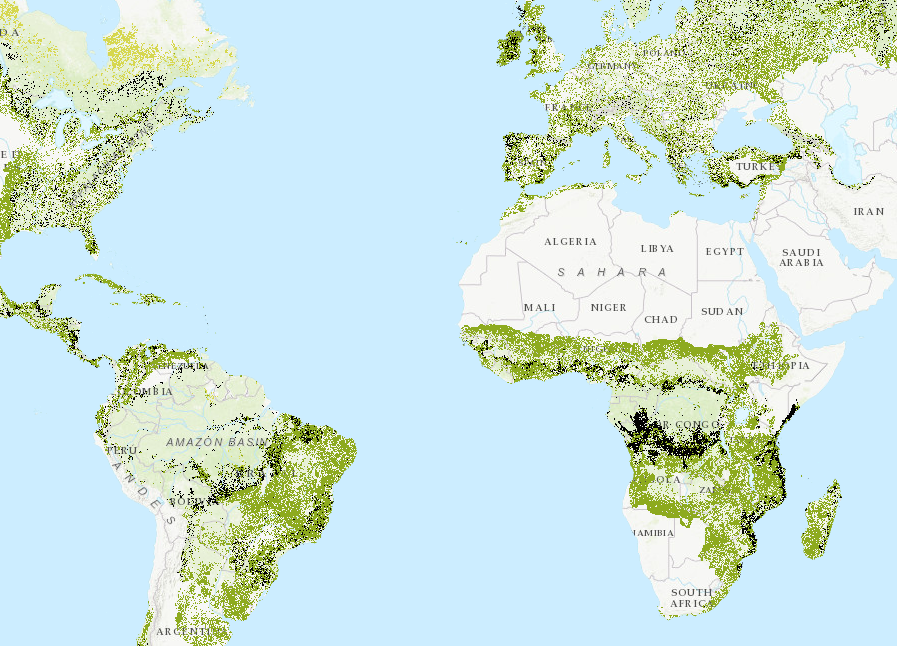
Action
The “Action” is a layer that describes where an action is possible within an priority place. The layers provided here are global datasets that indicate, to some extent, where an action in a landscape is possible.
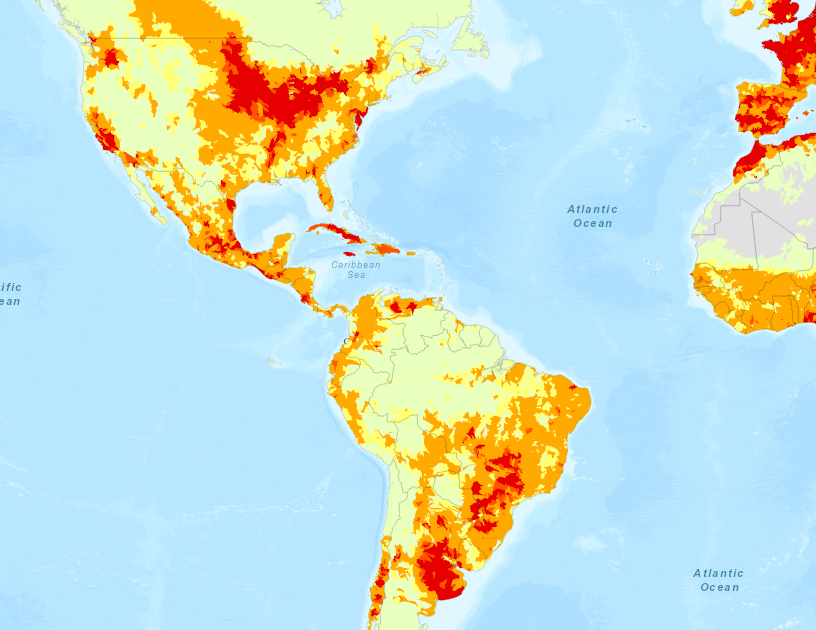
Initiatives
Initiatives are the factors that train the optimization of impact potentials towards areas that are important for other environmental or social objectives.
